

How to Tell If Leather Gardening Gloves Are Waterproof
Last Updated: November 24, 2026
Quick Summary
Most leather gardening gloves are water-resistant, not waterproof. Leather sheds light moisture and brief splashes, but it absorbs water when soaked, so treated goatskin suits damp soil and light rain best.
- Treated goatskin gloves handle splashes and damp contact for about 15 to 30 minutes.
- Prolonged wet work stiffens leather and causes cracking unless the gloves are conditioned after drying.
- Dry wet leather gloves at room temperature, never on a heater or in a dryer.
- Use the drop test: beading water means the glove is ready for light wet work.
- Choose sealed rubber or laminated gloves for hours of steady rain or heavy wet work.
Table of Contents
- Are Leather Gardening Gloves Waterproof?
- What Happens to Leather at Different Levels of Water Exposure
- How to Dry Wet Leather Gloves Without Cracking Them
- How to Clean Goatskin Gloves and Condition Leather Gardening Gloves
- Choosing Gloves for Wet Gardening Tasks and Your Next Pair
- Frequently Asked Questions
Are Leather Gardening Gloves Waterproof?
Most leather gardening gloves are water-resistant, not waterproof. Leather can shed light moisture and resist brief splashes, but it absorbs water when soaked. Treated goatskin gloves are generally suited to damp soil and light rain, though they still need drying and care after heavy exposure.
Keyword sentence: knowing whether a pair will stay dry matters before you spend on them. This guide explains how leather behaves when wet, what to expect from treated versus untreated pairs, and how to keep your hands comfortable through a long wet session.
Water-resistant vs. waterproof: what the difference means
A waterproof glove stops water from passing through its material in any reasonable use, usually because it uses a sealed rubber, PVC or laminated membrane. A water-resistant glove slows water down. Leather falls in the second group. Its fibers repel water at first, then gradually let it through once the surface is saturated.
Gardening glove guides consistently make this distinction. For a closer look at how leather performs in wet work, see how leather holds up in wet work. Gardening glove buying guide on leather water resistance notes that makers often treat leather to resist water, which is different from making it waterproof. A separate 2026 gardening glove review describes leather as suitable for damp weather but not a substitute for rubber when you are standing in wet beds.
Watch out: assuming "water-resistant" means the gloves will keep hands dry through a full morning of wet work. Once water soaks through, it stays trapped against your skin.
What Happens to Leather at Different Levels of Water Exposure
Leather is skin, and skin is built from collagen fiber bundles woven in a three-dimensional mesh. In the tanning process, those fibers are stabilized and lubricated with oils and fats. Water resistance comes from two things: the natural oils trapped in the fiber matrix and any surface treatment applied after tanning.
It helps to think in four levels of exposure, because each one produces different practical consequences.
Level 1: Splash and spray. A brief splash from a hose, a wet leaf, or a light mist beads on the surface and runs off. The leather may darken slightly at the contact point but dries back to its original color within minutes. No action needed beyond a wipe.
Level 2: Damp contact. Kneeling in wet mulch, handling wet soil, or working in light rain for 15 to 30 minutes. Moisture begins to penetrate the grain, and the palm feels cool and slightly heavy. The glove still functions, but grip on smooth wet tools starts to slip. This is the level treated goatskin is designed for. Dry the gloves at room temperature afterward and they return to normal.
Level 3: Prolonged wet work. An hour or more in steady rain, or repeated dunking in a bucket. Water reaches the inner fibers, the leather swells, and the glove loses shape. When it dries, the fibers pack tighter than before, so the leather stiffens along the flex lines of the fingers and palm. This is where cracking begins if the glove is not conditioned after drying.
Level 4: Full soaking. Standing water, a soaked-through glove left in a bucket, or a wash cycle. The fiber matrix saturates, the tannage can leach out, and the leather may dry hard and brittle. A single full soaking does not necessarily ruin a glove, but repeated soaking shortens its life significantly.
Watch out: assuming a glove that survived a splash will survive an hour of wet work. The surface treatment that sheds a splash is the first thing to wear away, and once it is gone the leather wets out much faster.
A simple at-home test tells you which level a glove is ready for. Put a few drops of water on the palm and leave them for 60 seconds. If they bead and roll off, the glove is ready for Levels 1 and 2. Because seams can defeat a water-beading surface, the same distinction matters when treating leather footwear, as Field & Moor notes in its discussion of country boots.
How to Dry Wet Leather Gloves Without Cracking Them
Drying technique decides whether a soaked pair lasts. Follow these steps:
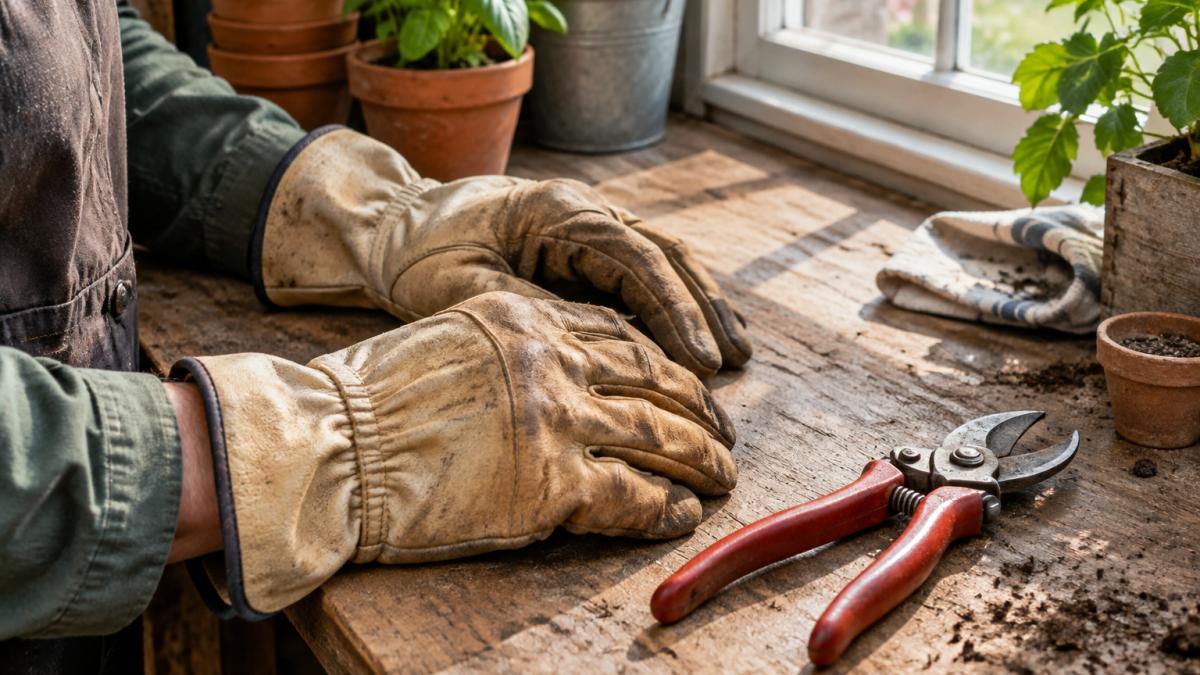
- Pat the gloves with a dry towel to lift surface water.
- Stuff them loosely with newspaper or a clean cloth to hold their shape.
- Leave them at room temperature, away from radiators, stoves and direct sun.
- Check after several hours and replace the paper if it is saturated.
- Let them dry fully before you store them.
Watch out: putting gloves on a heater or in a clothes dryer. The heat pulls oils out of the leather, which leads to stiffness and cracking.
This is also where storage matters. Leather breathes and absorbs humidity, so a dry, airy place keeps it supple between jobs. Our care notes cover this in more detail on the Care Instructions for Goatskin Gloves page.
How to Clean Goatskin Gloves and Condition Leather Gardening Gloves
Goatskin can be cleaned, but gentle handling matters. Wipe off dirt and sap with a damp cloth and mild soap, rinse lightly, and air-dry as described above. Avoid soaking the gloves for long periods.
Conditioning helps restore the natural oils that water and washing remove. Apply a small amount of leather conditioner with a soft cloth, work it into the palm and fingers, and let it absorb before wearing. Use a conditioner made for leather, and test it on a hidden area first.
Our product guidance on how to clean goatskin gloves without ruining them walks through the full process step by step.
Choosing Gloves for Wet Gardening Tasks and Your Next Pair
Waterproofness is not one feature; it is a trade-off against dexterity, breathability, drying time, and durability. The right glove depends on the task, not on a single label. Use this task-by-task framework.
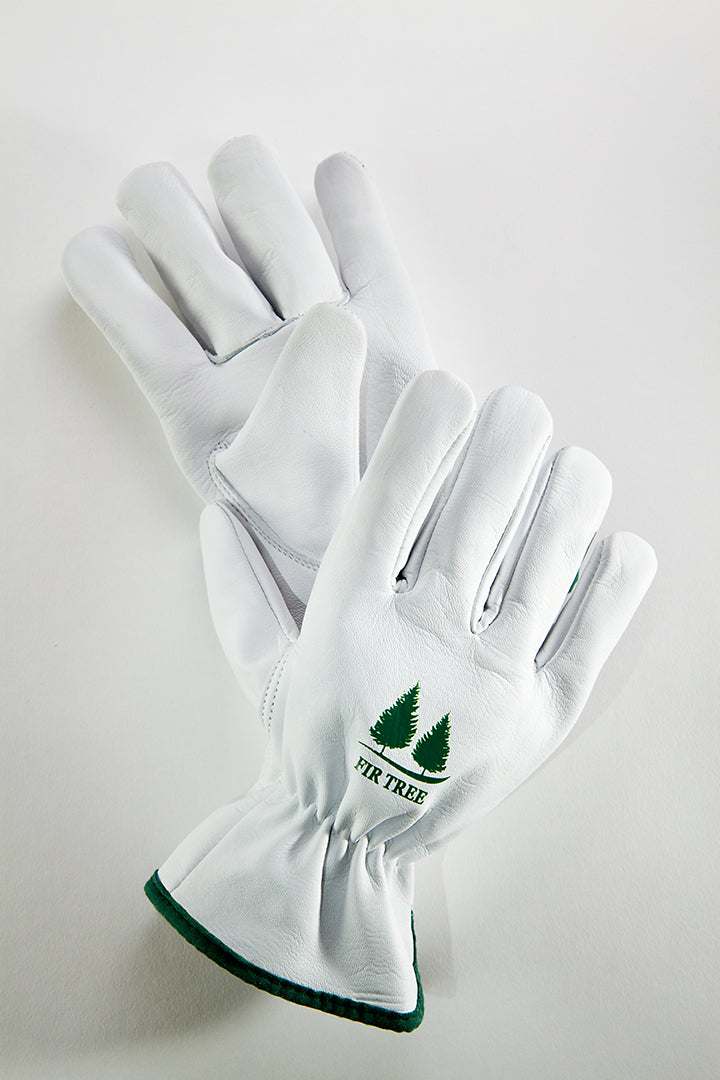
Weeding and planting in damp soil. Treated goatskin is the practical choice. You need feel for small roots and seeds, the soil is damp rather than soaking, and the glove will dry between sessions. The goatskin gardening gloves at $16.99 suit this kind of work. Rubber gloves give complete water protection but cost you the fine feel that makes weeding efficient.
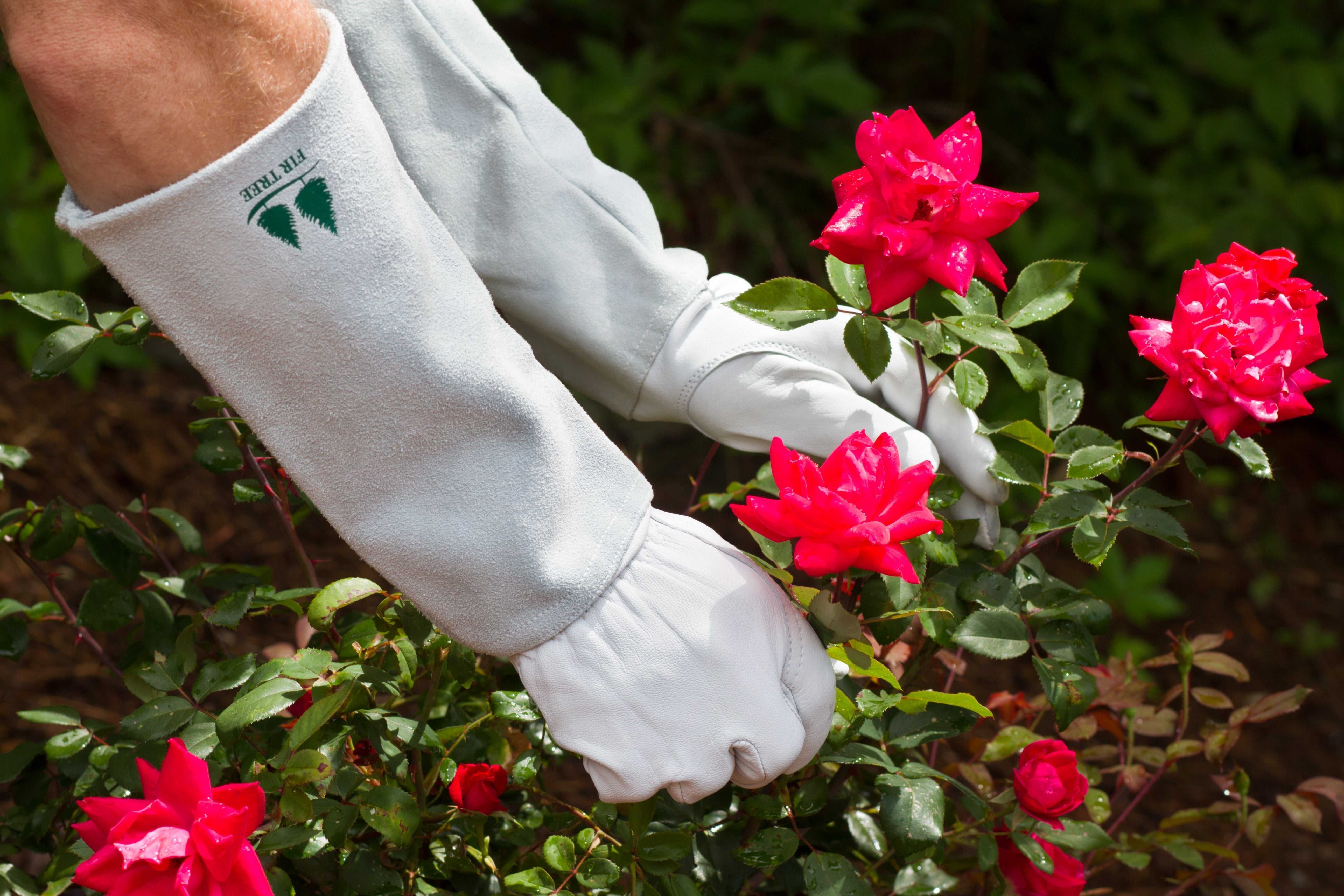
Pruning roses, brambles, and thorny shrubs in wet weather. Thorn protection matters more than waterproofness here, because a thorn puncture defeats any waterproof membrane anyway. The goatskin gauntlet gardening gloves at $22.99 provide forearm coverage for thorny work. Purpose-built waterproof gloves with reinforced palms are the alternative if you expect steady rain, but check that the reinforcement does not stiffen the fingers.
Clearing soaked brush, moving wet firewood, or working in steady rain for hours. This is Level 3 or 4 exposure, and leather is the wrong tool. A sealed rubber, PVC, or laminated-membrane glove keeps hands dry, and the loss of breathability is acceptable because you are not doing fine work. Expect lower dexterity and a glove that does not breathe, so your hands may sweat even though they stay dry from the outside.
Mixed conditions across a long session. Many gardeners keep two pairs: treated goatskin for dry and damp work, and a waterproof pair for the wet jobs. Rotating pairs also lets one dry fully while you wear the other, which extends the life of both.
The trade-offs in plain terms: treated leather wins on dexterity, breathability, and thorn resistance, and loses on total water protection and drying time. Purpose-built waterproof gloves win on staying dry in sustained wet conditions, and lose on feel, breathability, and often on durability at the seams. Neither is better in general; the task decides.
Watch out: buying a waterproof glove for thorny work without checking puncture resistance. A waterproof membrane that tears on a thorn is no longer waterproof, and the hole is hard to find and repair.
For occasional damp work, our goatskin gardening gloves for garden and outdoor work at $16.99 cover weeding, planting, and light pruning. For thorny work with forearm coverage, the goatskin gauntlet gardening gloves start at $22.99. Our guide on why professionals prefer goatskin work gloves explains why the material holds up under demanding use.
| Glove Type | Water Protection | Dexterity | Breathability | Drying Time | Best For | Price |
|---|---|---|---|---|---|---|
| Treated goatskin | Water-resistant (Levels 1-2) | High | High | Moderate | Damp soil, rose pruning | $16.99 |
| Goatskin gauntlet | Water-resistant (Levels 1-2) | Good | High | Moderate | Thorns, forearm coverage | $22.99 |
| Rubber or coated synthetic | Waterproof (Levels 3-4) | Lower | Low | Fast (surface) | Heavy wet work | Varies |
Our recommendation: match the glove to the task at hand, and dry and condition leather after wet sessions so it lasts.
Frequently Asked Questions
Are goatskin gardening gloves water-resistant?
Leather surfaces generally shed light dampness better than many unlined fabric gloves. They are still not waterproof, though. Prolonged soaking will saturate the leather, and it may stiffen as it dries. For short damp jobs such as deadheading after a light rain, goatskin works well. For standing in wet beds or handling muddy tools for an hour, choose a glove with a rubber or synthetic coating.
Can wet leather gardening gloves be dried without damaging them?
Yes, if you dry them slowly. Pat off surface water with a towel, stuff the gloves with newspaper or a clean cloth to keep their shape, and air-dry them at room temperature away from heaters, stoves and direct sun. Heat and fast drying make leather hard and prone to cracking. Once they are dry but still slightly stiff, work in a light leather conditioner to restore flexibility.
How can I make leather gardening gloves more water-resistant?
Leather treatments are available from many suppliers; follow the directions on any product you choose. Work it into the palms, fingers and back of the hand, then let it cure fully before use. Treatments slow water absorption but do not make the gloves waterproof, and they wear off with repeated washing and friction. Reapply after cleaning or when water begins to soak in quickly.

